
Solution · Lithium Brine
Lithium Dehydration & Brine Processing
Lithium producers concentrate brines in evaporation ponds or thermal plants before the lithium can be recovered. Petro Sep lists lithium recovery among the applications of AQUA-SEP® vacuum membrane distillation: water vapor crosses a hydrophobic membrane, the lithium and other dissolved salts stay in solution, and the brine concentrates. There is no completed Petro Sep lithium project yet, so this work starts with feasibility and bench testing on the producer's own brine.
Readiness: In development
What you get
Outcomes on this vertical.
- Energy per unit of water
- Lower
- AQUA-SEP® captures and reuses latent heat within the system and uses 50% less energy per unit of water recovered than RO and evaporators, per Petro Sep's AQUA-SEP® data. Savings on a given brine depend on feed concentration and available waste heat.
- Lithium retention
- High
- Lithium and other dissolved salts stay on the feed side. Water is the species that crosses, so the valuable fraction concentrates rather than carries over.
- Footprint and modularity
- Skid-based
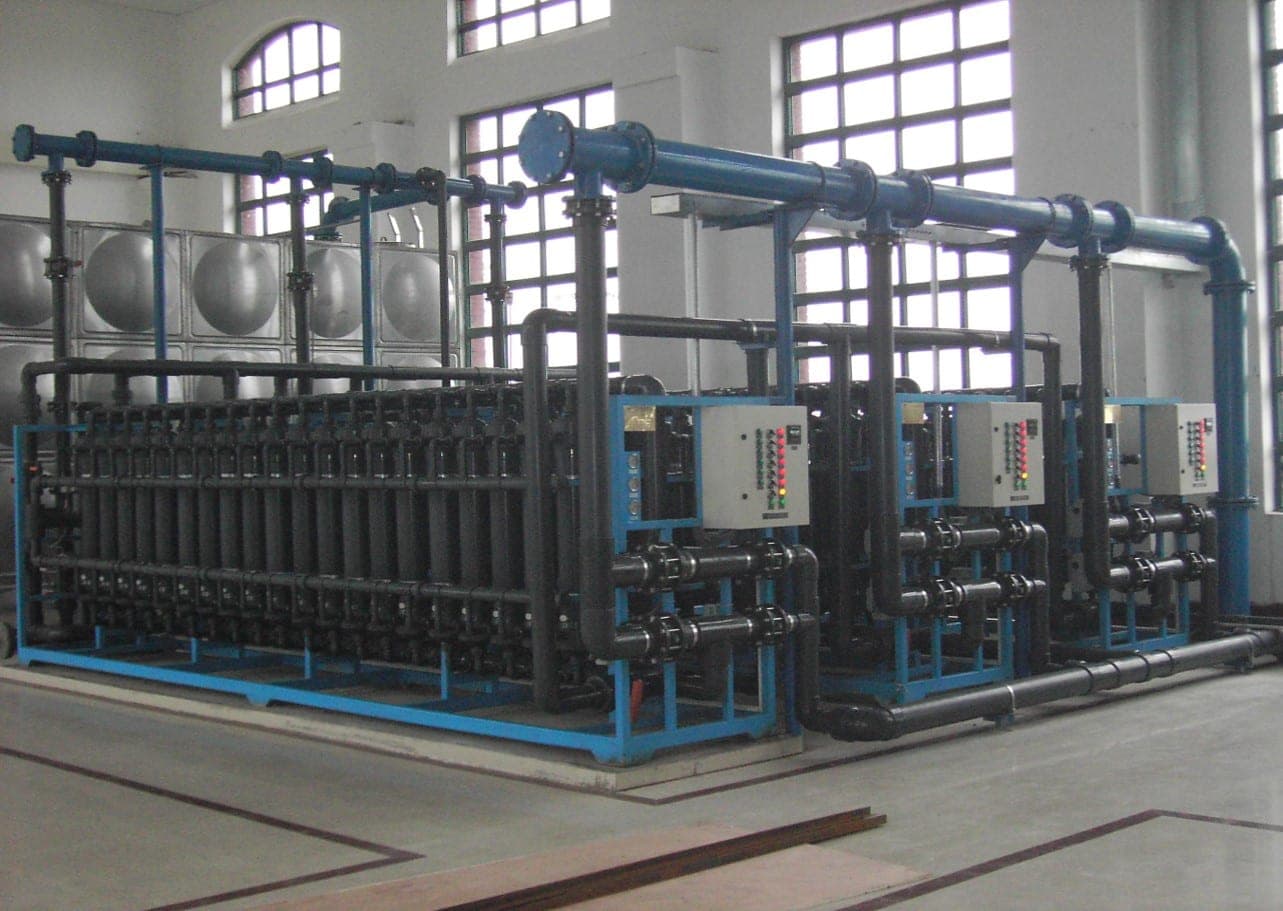
- Delivered as factory-packaged membrane skids that bolt onto an existing concentration train, so producers can stage capacity without a full plant rebuild.
Why vacuum membrane distillation suits lithium brines
Conventional brine concentration leans on evaporation ponds or multi-stage thermal distillation, both of which are slow, land-hungry, or energy-intensive. Vacuum membrane distillation takes a different route: a porous, hydrophobic membrane lets water vapor pass under a vacuum on the downstream side while the dissolved salts stay behind. The latent heat is captured and reused within the system, so the energy per unit of water removed is lower than in evaporators. For lithium feeds, that means concentration steps that would otherwise dominate the energy budget can be shortened, with the membrane doing the selective work that heat alone does inefficiently.
Where this sits today
Lithium recovery is listed among AQUA-SEP® applications, and Petro Sep has outlined a vacuum membrane distillation process for the solvent loop in lithium-ion battery recycling. There is no completed Petro Sep lithium project to point to yet, so we describe this as development work. The physics is sound, but real brines carry impurities, organics, and temperature profiles that a generic test cannot capture. We start with a feasibility study and bench work on your brine, so you can measure the result against your existing process before committing to a pilot or a deployment.
Industries
Where this matters.
Frequently asked
Common questions.
Is this a proven, full-scale process?
How much energy does it actually save?
Can it integrate with our existing concentration train?
Interested in Lithium Dehydration & Brine Processing?
Let us scope it.
License the solution or deploy it as a turnkey plant. Either way, send the stream or the spec and we will tell you, honestly, what is proven and what is still in development.