
Solution · Bioethanol
Biomass-to-Bioethanol
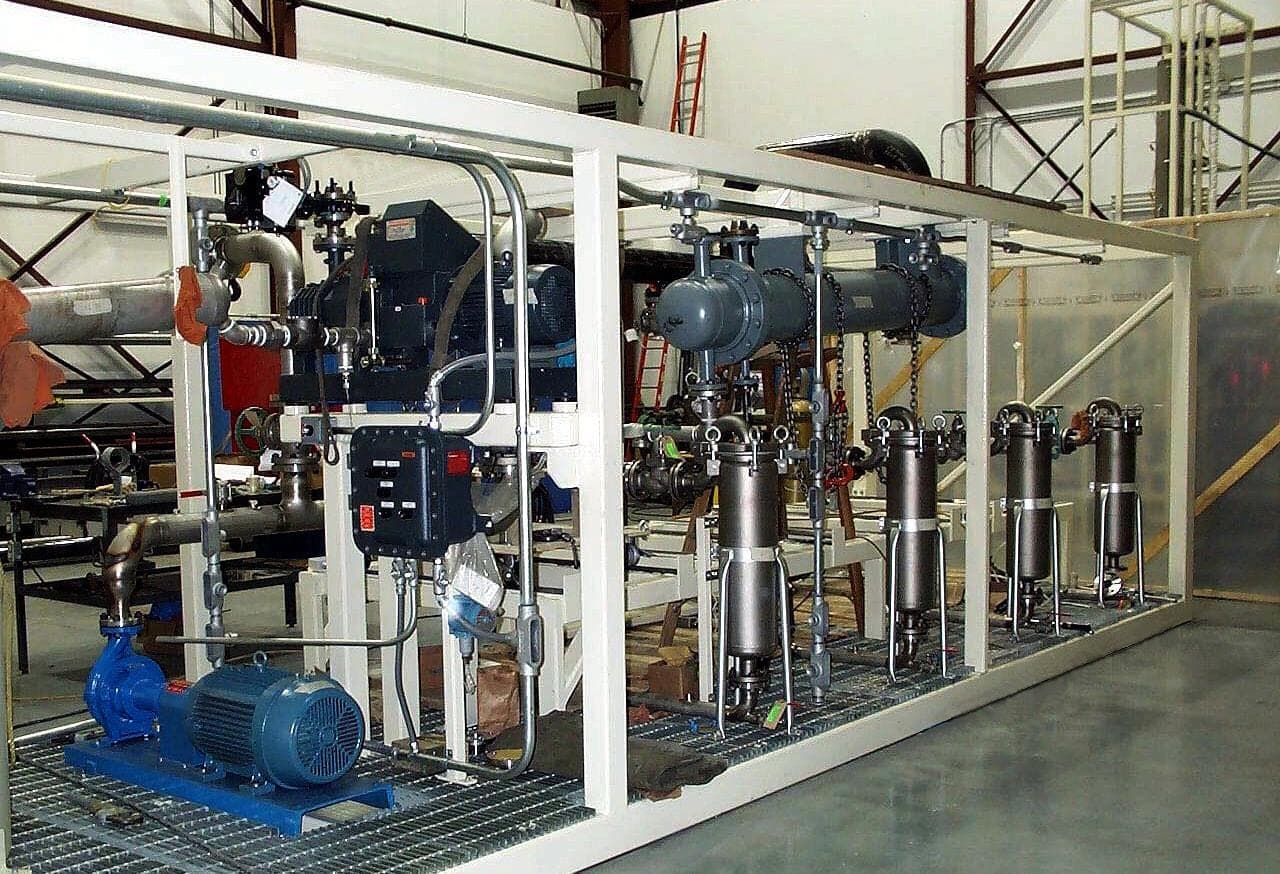
Producing fuel-grade ethanol means breaking the water-ethanol azeotrope, a step that conventional distillation cannot finish on its own and that consumes significant energy. Petro Sep applies pervaporation and vapor permeation to dehydrate ethanol past the azeotrope and to recover solvents within the process. Petro Sep has completed projects in this sector, including a 50,000 L/day biofuel plant in Ontario (2010) and the Sarnia bioethanol and ABE hybrid plant (2016), and two 100,000 L/day bioethanol projects have been under way in Canada and Malaysia since 2023.
Readiness: Proven, deployed
What you get
Outcomes on this vertical.
- Past the azeotrope
- Fuel-grade ethanol
- Pervaporation and vapor permeation remove water selectively beyond the point where distillation stalls, reaching the dryness fuel-grade ethanol requires.
- Energy at the dehydration step
- Lower
- Membrane dehydration targets the energy-heavy tail of the process, where distillation and molecular sieves are least efficient. The reduction is established per feed.
- Solvent and water recovery
- Closed-loop friendly
- The same membrane stages recover solvents and process water, supporting tighter, lower-waste plant operation for renewable-fuel producers.
Breaking the azeotrope without the energy penalty
Ethanol and water form an azeotrope at roughly 95 percent ethanol, which is the ceiling ordinary distillation can reach. Pushing past it traditionally means azeotropic or extractive distillation or molecular-sieve beds, all of which add energy and complexity. Pervaporation and vapor permeation use a dense membrane that lets water permeate while holding the ethanol back, so dehydration past the azeotrope happens by selective transport rather than by boiling. Placed on the dehydration tail of the process, the membrane stage carries the dryness the fuel spec demands while the energy-hungry separation that distillation handles poorly is offloaded to the membrane.
Delivered on completed projects
Petro Sep's project record includes a completed 50,000 L/day biofuel plant in Ontario (2010) and the Sarnia hybrid plant (2016), which combines AZEO-SEP®, VOC-SEP®, and AQUA-SEP® for bioethanol and ABE, plus an AZEO-SEP® hybrid system installed alongside a distillation column in Virginia (2010). Two 100,000 L/day bioethanol projects, in Canada and Malaysia, have been ongoing since 2023. Each new plant is still sized against the producer's own feed, fermentation profile, and existing distillation and sieve steps, so the integration and the economics are confirmed on the producer's numbers rather than a generic promise.
Frequently asked
Common questions.
Does this replace distillation entirely?
What stage of readiness is this?
Can it recover solvents as well as dehydrate ethanol?
Interested in Biomass-to-Bioethanol?
Let us scope it.
License the solution or deploy it as a turnkey plant. Either way, send the stream or the spec and we will tell you, honestly, what is proven and what is still in development.