Solution · Hybrid ZLD
Hybrid & Zero-Liquid-Discharge Systems
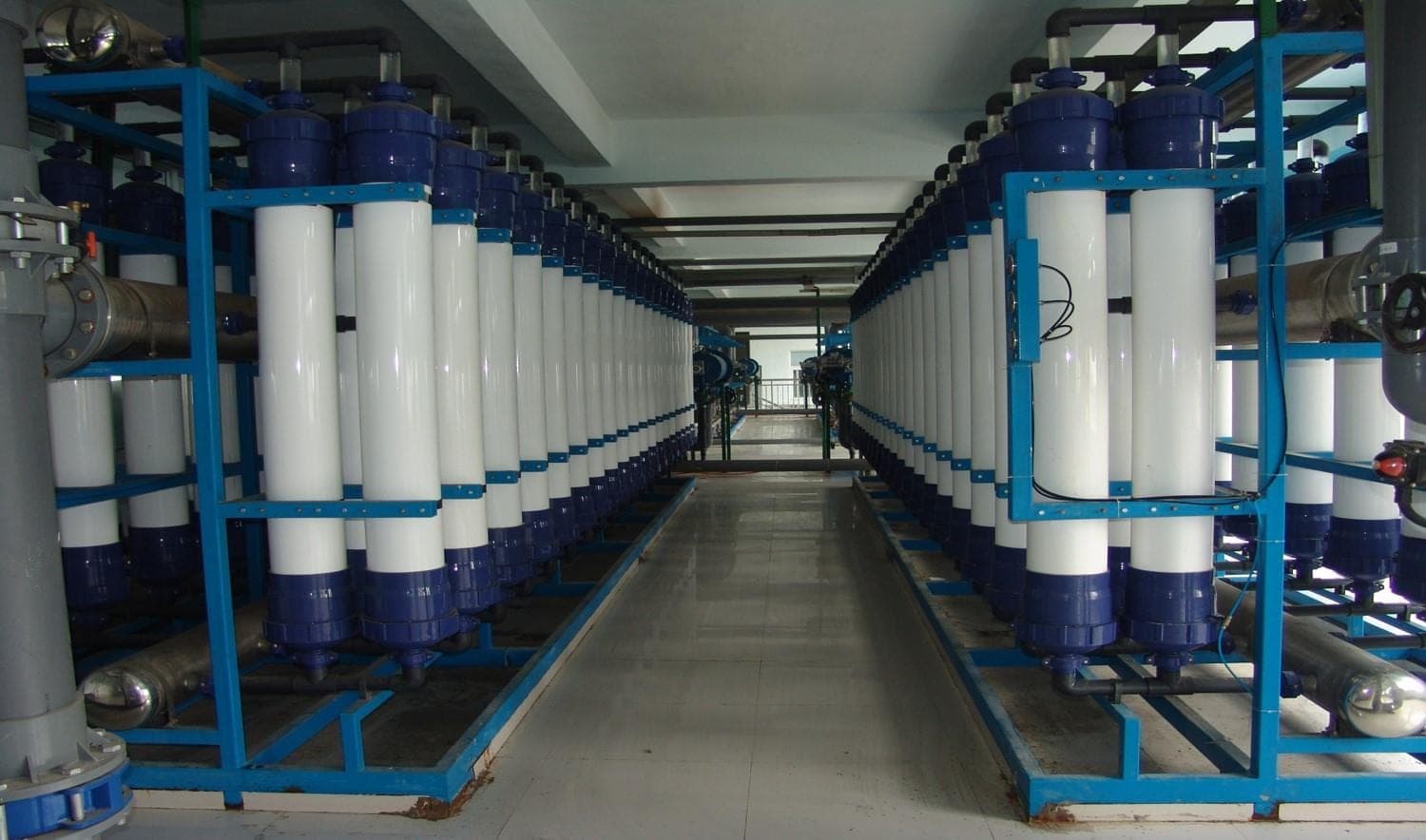
Zero liquid discharge is rarely achieved by a single technology economically. Petro Sep designs hybrid trains that pair membrane separation with thermal concentration, letting each stage do the work it does best: membranes for efficient bulk recovery, thermal for the concentrated tail. This is a proven approach, deployed on mining water, RO reject brine, and industrial wastewater where recovery targets are high and discharge is constrained.
Readiness: Proven, deployed
What you get
Outcomes on this vertical.
- Toward zero liquid discharge
- High recovery
- Hybrid trains push water recovery far higher than membranes or thermal alone, shrinking the residual to a concentrate or solid for the most constrained discharge sites.
- Energy per cubic metre recovered
- Optimized by stage
- Membranes carry the efficient bulk recovery and thermal handles only the concentrated tail, so total energy per unit water recovered is lower than an all-thermal route.
- Deployment record
- Field-proven
- Built around vacuum membrane distillation and complementary thermal steps that are in service on mining water, RO reject brine, and industrial wastewater.
Why hybrid wins on hard streams
No single separation technology is efficient across the full concentration range from a dilute feed to a near-dry residue. Membranes recover the bulk of the water efficiently at low to moderate salinity, but their efficiency falls as the brine concentrates. Thermal concentration handles very high salinity well but is energy-intensive if asked to do the whole job. A hybrid train assigns each stage to the range where it is strongest: membrane separation, often vacuum membrane distillation, for efficient bulk recovery, then a thermal step to take only the concentrated tail to a solid or near-solid. The result reaches high overall recovery and zero liquid discharge at a lower total energy and cost than a single-technology approach.
Designed around the stream, validated by deployment
Every hard stream is different, so a hybrid train is engineered to the feed: its salinity, its foulants, its temperature, and the site's recovery target and discharge limits. Petro Sep designs the staging, sizes the membrane and thermal sections together, and packages them for the site. We describe this as proven because the constituent technologies are field-deployed and the hybrid logic is well established in industrial water treatment. The conservative position is that hybrid ZLD is achievable and operating, and the right configuration is set by the engineering team for each specific stream rather than assumed from a template.
Frequently asked
Common questions.
Why not use a single technology for ZLD?
Is this actually deployed, or conceptual?
Can you guarantee true zero liquid discharge?
Interested in Hybrid & Zero-Liquid-Discharge Systems?
Let us scope it.
License the solution or deploy it as a turnkey plant. Either way, send the stream or the spec and we will tell you, honestly, what is proven and what is still in development.