
Case study · Industrial Manufacturing & Environmental · 2008
Full-scale AQUA-SEP® skids for RO reject and brine concentration
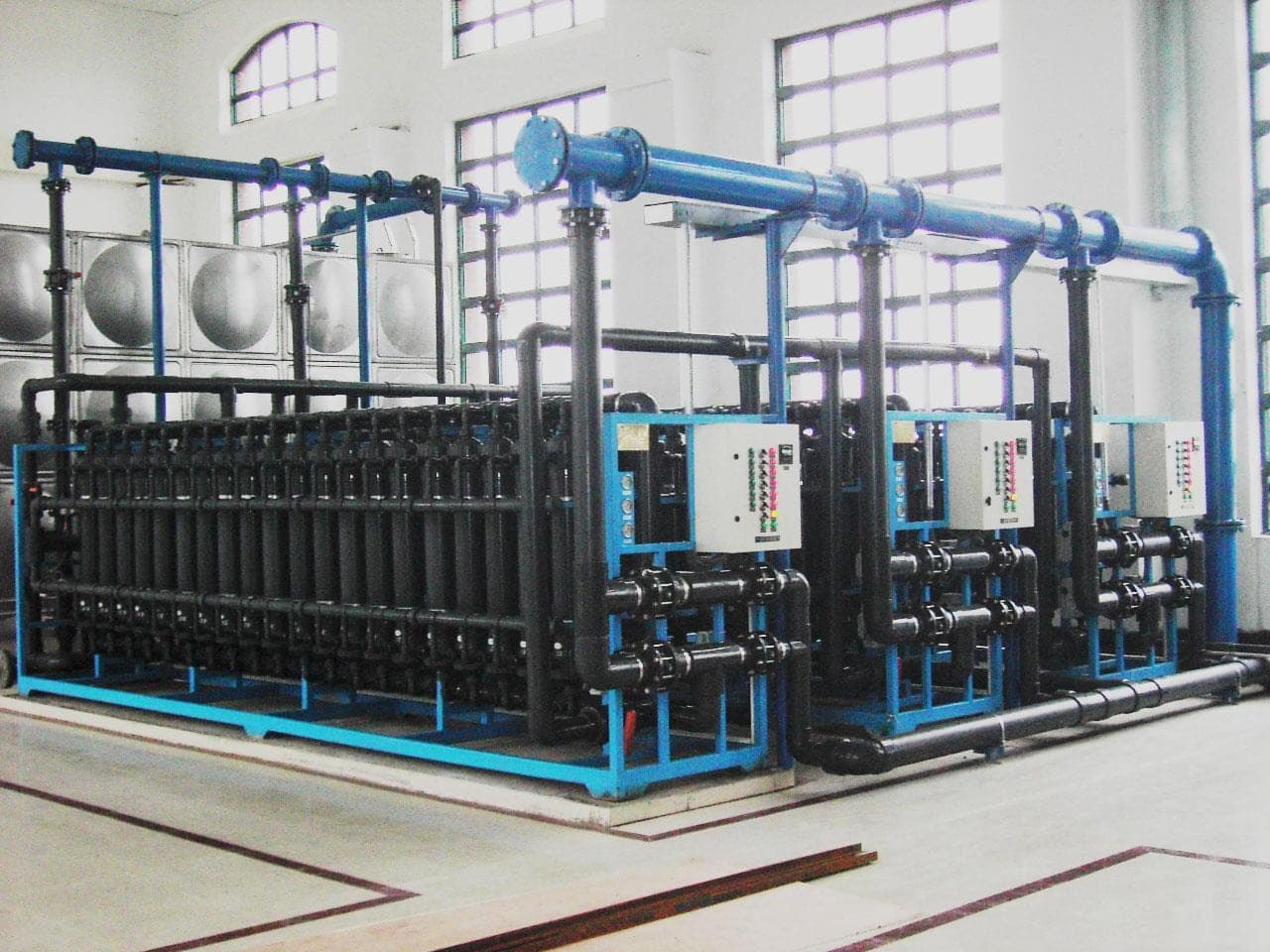
A full-scale AQUA-SEP® membrane skid installation in China, 2008, for reverse osmosis (RO) reject water treatment and brine concentration. AQUA-SEP® is Petro Sep's vacuum membrane distillation platform for high-TDS brine, especially RO reject.
- Industry
- Industrial Manufacturing & Environmental
- Location
- China
- Year
- 2008
- Technology
- AQUA-SEP®
Outcomes
The numbers that mattered.
- Scale
- Full scale
- A full-scale membrane skids installation, per Petro Sep's company profile.
- Feed
- RO reject
- RO reject water treatment and brine concentration.
- Plant
- Brine concentration
- Petro Sep's project photo list calls the installation a brine concentration plant.
01
Why RO reject goes to AQUA-SEP®
Reverse osmosis (RO) uses a high-pressure pump to force water across a membrane, leaving almost all of the dissolved salts in the reject stream. The saltier the feed, the more pressure RO needs, and Petro Sep's own chart marks the maximum salt content for RO at roughly 6 to 7 percent total dissolved solids (TDS). AQUA-SEP® works differently: the brine runs along one side of a hydrophobic, microporous hollow-fiber membrane, the other side is kept under vacuum, and water passes through as vapor while almost all of the dissolved salts stay behind. Petro Sep rates AQUA-SEP® for feeds of 25 percent salt and more and describes it as suitable for high-TDS brine, especially RO reject. Its RO material says that routing the RO reject to AQUA-SEP® could raise water recovery to as much as about 95 percent. These are general figures for the technology, not measurements from this plant.
02
On the record
Petro Sep's company profile lists this project as a full-scale membrane skids installation for RO reject water treatment and brine concentration, China, 2008. Petro Sep's project photo list also calls it a brine concentration plant. A separate AQUA-SEP® entry in China, dated 2014, covers membrane skid testing for industrial waste and brine concentration.
Have a similar feed
we should look at?
Send us a sample and a sentence about your goal. We will tell you whether membrane separation fits and what we would do at each of the five steps.