
Case study · Industrial Manufacturing & Environmental · 2014
Mobile AQUA-SEP® vacuum skid for hazardous water treatment
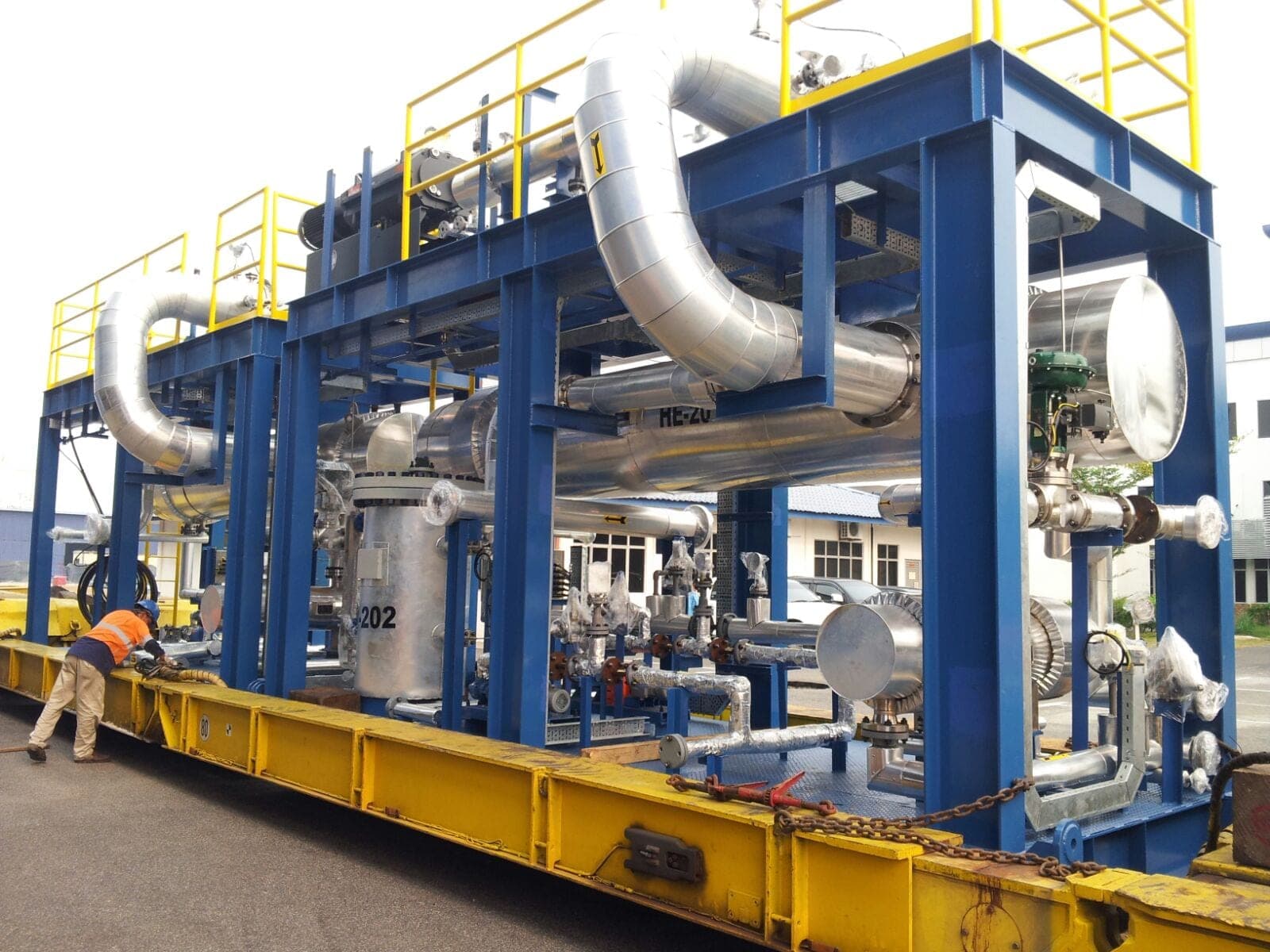
An AQUA-SEP® vacuum skid for a mobile hazardous water treatment plant in Rhode Island, USA. Petro Sep's company profile dates the project to 2014 and shows the skid under construction.
- Industry
- Industrial Manufacturing & Environmental
- Location
- Rhode Island, USA
- Year
- 2014
- Technology deployed
- VMD
Outcomes
The numbers that mattered.
- Application
- Hazardous water
- The vacuum skid of a mobile hazardous water treatment plant.
- Technology
- AQUA-SEP®
- Petro Sep's vacuum membrane distillation platform, which its brochure lists for toxic wastewater.
- Format
- Mobile
- Petro Sep's profile describes a mobile treatment plant; the photographs show the skid loaded on a low-loader trailer.
01
On the record
Petro Sep's company profile lists the project under its AQUA-SEP® technology: Rhode Island, USA, 2014, a mobile hazardous water treatment plant vacuum skid, shown under construction. Petro Sep's project photo list gives the same description. The photographs on this page come from Petro Sep's project files and show the open-frame skids in a fabrication shop, loaded on a low-loader trailer and during a tandem crane lift.
02
How AQUA-SEP® treats water
In general terms, AQUA-SEP® is a hollow-fiber vacuum membrane distillation process. The feed runs along one side of a hydrophobic, microporous membrane while the other side is kept under vacuum; water passes through the pores as vapor, and almost all of the dissolved salts stay behind. Petro Sep's brochure says it can treat reject brine from desalination plants and from RO and seawater RO (SWRO) plants, and toxic wastewater.
Gallery
From the field.
Photographs from fabrication, installation, and commissioning.
Industry
More on Industrial Manufacturing & Environmental.
Process equipment, packaged plants, and membrane recovery for manufacturing, water reuse, and emissions control.
Explore industry
Technology
How Vacuum Membrane Distillation works.
Membrane distillation under vacuum, built as AQUA-SEP®, for brines, RO reject and high-salinity wastewater.
Specs and applications
Have a similar feed
we should look at?
Send us a sample and a sentence about your goal. We will tell you whether membrane separation fits and what we would do at each of the five steps.